Methods of Growing Process
How Are They Made
Shoppers are increasingly choosing lab-grown diamonds over mined diamonds for many reasons: they’re more sustainable, more affordable, and provide complete assurance that they were ethically sourced. Lab diamonds are real diamonds that are optically, physically, and chemically identical to their mined counterparts, and will test as a diamond when a diamond tester is used.
There are two processes in which lab diamonds can be grown:
- High Pressure, High Temperature (HPHT)
- Chemical Vapor Deposition (CVD)
The HPHT method -the original method
To grow an HPHT diamond, a small diamond seed (a very tiny diamond) is placed in carbon, the element that diamonds are made of. The diamond seed is exposed to extreme heat and pressure, replicating the way diamonds are naturally grown underground by the earth. The diamond seed is exposed to temperatures of over 2,000 degrees Fahrenheit and pressure of about 1.5 million PSI (pounds per square inch). The carbon melts and forms a diamond around the seed. It is then cooled and the diamond is formed.
A rough HPHT diamond forms differently than a rough CVD diamond.
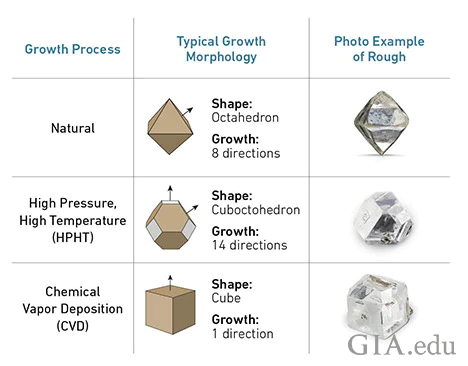
HPHT diamonds are more likely to have a yellowish hue because they are exposed to nitrogen while forming. They also tend to have darker inclusions, which are metallic. These metallic inclusions can help scientists identify them as lab-grown because naturally formed diamonds rarely capture metals during formation.
How to Identify HPHT Diamonds
The most reliable way to identify an HPHT diamond would be to simply look at its grading report. Lab diamond grading reports will specify if the diamond was grown through the HPHT method or the CVD method. Below is an example of a GIA report that identifies a lab diamond as an HPHT diamond.

Another way to identify an HPHT diamond would be to see if it has a blue tint. Some (but not all) HPHT diamonds have what is called a blue nuance, a side effect of the HPHT process. The HPHT process can expose diamonds to boron, which is what can give diamonds a blue color. In fact, fancy blue diamonds are the result of extra boron during the growing process!
How Are CVD Diamonds Made
The CVD method was created in the 1980s, making it newer than the HPHT method. The CVD method imitates how diamonds form in interstellar gas clouds. The CVD method uses less pressure than the HPHT method as well as smaller machines.
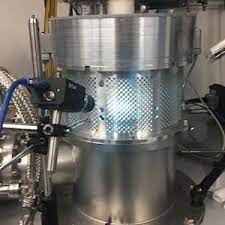
The CVD method places a diamond seed in a vacuum chamber. This chamber becomes filled with carbon-rich gases and is heated to nearly 1500 degrees Fahrenheit. The gas turns into plasma from these extremely high temperatures, causing the release of carbon pieces. These carbon pieces become layered onto the diamond seed, which grows the diamond
How to Identify CVD Diamonds
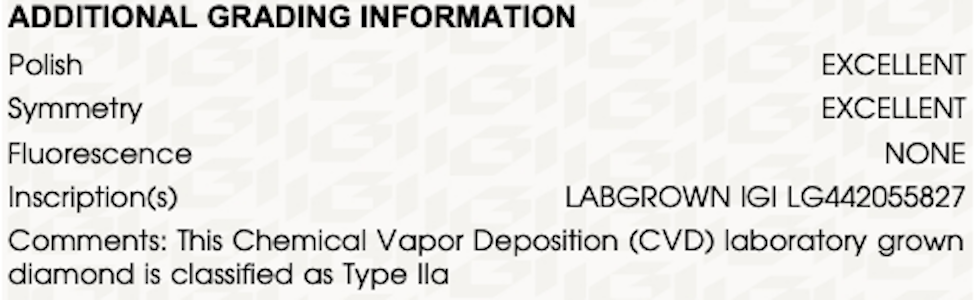
CVD diamonds have fewer tells. The easiest way to identify if you have a CVD diamond would be to check the diamond’s grading report, which will list how the diamond was grown.
Which method is better?
You will not be able to tell the difference between a CVD and HPHT diamond with the naked eye. Both methods can create a beautiful, sparkling diamond. Both the CVD method and the HPHT method will create a real diamond that is optically, chemically, and physically identical to earth-grown diamonds